
Commercial exterior cleaning · Arizona

Gas Station Forecourt Cleaning in Phoenix

Gas-station forecourt and exterior cleaning in Phoenix and Arizona, planned with the operator around fueling lanes, customers and reopening. Approved concrete, storefront walks, curbs and trash areas are mapped individually. Canopies and specialty treatment are assessed separately, with equipment protection, traffic controls and wastewater handling agreed before cleaning.

Map forecourt zones and coordinate the cleaning window

Fueling-lane concrete and islands

Identify fueling positions, concrete condition, gum, drink spills, automotive residue, drains and equipment. The operator approves work zones and any temporary closures before surface treatment and rinsing begin.

Request a forecourt assessment

Storefronts, walks and trash areas

Define entry walks, curbs, façade washing and refuse-area work as separate inclusions. Schedule the sequence around customers, deliveries, waste pickup and the site's responsible contact.

Review storefront walkway cleaning

Canopies and recurring property upkeep

Canopy material, height, fixtures and access require inspection before cleaning is quoted. Agree visit frequency, reporting and extra-work approval; active leaks or unknown releases follow the operator's response procedures.

Review canopy-cleaning scope

Built for Arizona conditions

A professional process—not one-pressure-fits-all

Each site receives a safety and runoff plan based on operating hours, canopy layout, traffic, and affected surfaces.

Fuel and oil residue
Gum and spills
Heavy customer traffic
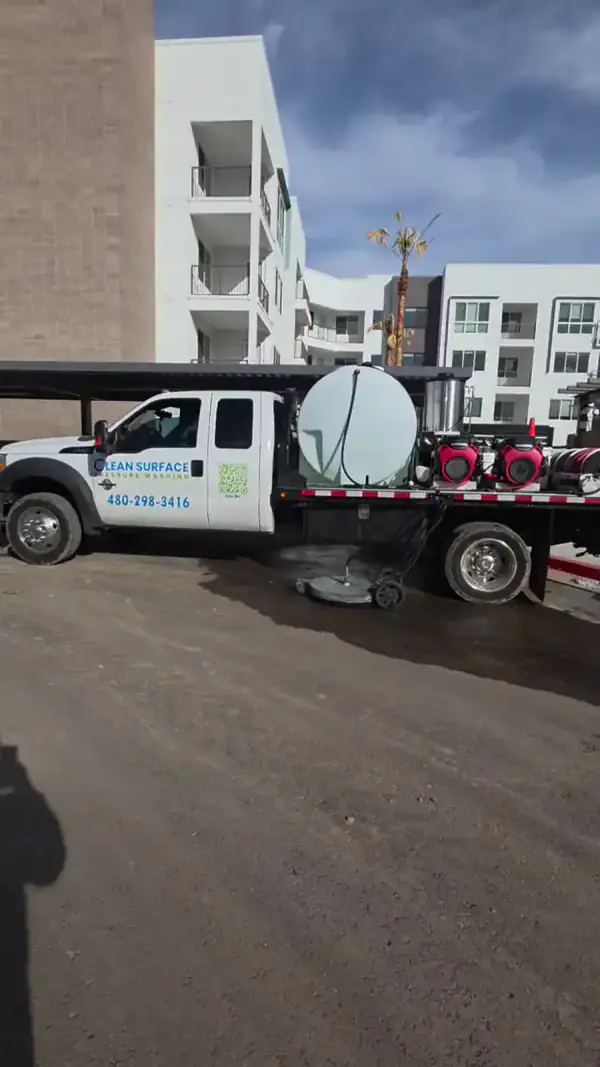
Clean Surface commercial service truck at an Arizona property

What to expect

What professional gas station cleaning involves

Gas-station exterior cleaning involves active vehicle traffic, fueling equipment, storefronts, gum, drink spills, automotive residue, trash areas, canopies, and concrete that may remain open around the clock. The work must be carefully zoned and coordinated with site management.

The scope may include approved fueling-lane concrete, sidewalks, entries, curbs, trash areas, storefront surfaces, and selected canopy components. Methods are chosen around petroleum residue, electrical and fueling equipment, drains, public access, water, and wastewater requirements.

Pressure washing is not spill response, underground-system service, hazardous-material remediation, fuel-system maintenance, or environmental cleanup. Active or unknown releases must be handled under the operator's emergency procedures by appropriately qualified parties.

How the project moves forward

01

Assess

Tell us about the surface, size, condition, stains, and access.

02

Plan

We choose appropriate pressure, temperature, chemistry, equipment, and safeguards.

03

Confirm

We confirm scope and pricing before cleaning, then inspect completed work.

A defined cleaning plan

Our gas station cleaning process

01

Coordinate with the operator

Traffic, active pumps, closures, spills, emergency contacts, drains, utilities, and reopening requirements are reviewed.

02

Create controlled zones

Work is phased with agreed barriers and access so customers and vehicles remain outside active cleaning areas.

03

Clean the approved surfaces

Treatment, hot water, controlled pressure, agitation, and recovery are used only within the defined scope.

04

Document conditions

Deep staining, active leaks, inaccessible areas, damage, and environmental concerns are reported rather than concealed.

Experienced Arizona crews

Real Clean Surface technicians, equipment, and project experience.

Protected and prepared

Licensed and insured professionals with OSHA 10 training.

Clear expectations

Surface, stain condition, access, and final scope are confirmed first.

What affects the estimate?

We price the actual scope instead of relying on one number that ignores condition and access.

  • Approved concrete area, islands and fueling positions
  • Gum, beverage residue, automotive staining and soil level
  • Operator-approved work zones, closure limits and reopening
  • Separate storefront, canopy, curb and trash-area inclusions
  • Equipment protection, water, drains, recovery and disposal
  • Visit frequency, closeout photos and scope-change approval

Built for local conditions

Why Arizona experience matters

Busy Arizona fueling sites see constant vehicle traffic, windblown dust, spilled beverages, gum, and automotive residue. Night or phased work can reduce interference, but the operator's safety controls and environmental procedures govern the site.

Request a Site Assessment

Questions about gas station cleaning

Are canopy, storefront and trash-area cleaning included?

Each area is listed separately in the proposal. Canopy access and fixtures, facade materials, customer walks and refuse-area surfaces need their own inspection, operating plan and approved cleaning method.

Will old petroleum stains disappear from the concrete?

Older automotive residue can penetrate porous concrete and leave a permanent shadow. The assessment separates routine surface cleaning from specialty treatment and confirms the expected improvement and remaining-stain limits before work.

Can the station remain open?

Potentially, with operator-approved phasing. Active work zones must be separated from vehicles and customers, and some areas may require temporary closure.

Do you clean up fuel spills?

Routine exterior cleaning is not emergency spill response or hazardous-material remediation. Active releases require the operator's emergency plan and qualified responders.

Can you clean the canopy?

Accessible canopy surfaces may be quoted after inspecting height, material, equipment, traffic control, and surrounding fueling systems.

Ready to clean up your property?

Send your property details to confirm scope, access and scheduling.

Request a Site Assessment

Choose what works for you

Two easy ways to request service

Get a fast starting estimate, or send your job details directly through our Jobber request form.

Call Estimate Form