
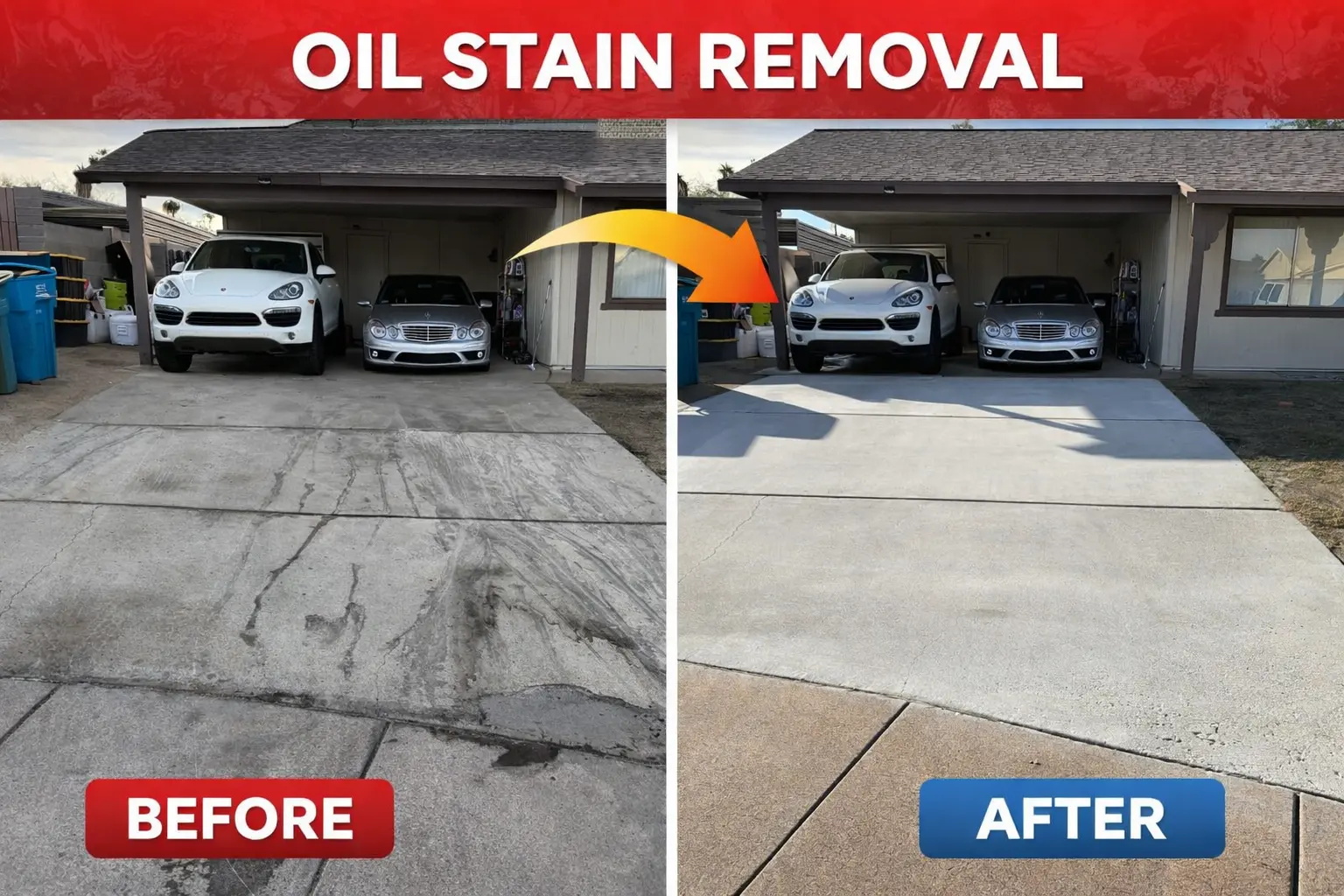
More than basic pressure washing
Arizona's Residential Driveway & Concrete Stain-Removal Specialists
Oil, rust, battery residue, irrigation minerals, tire marks, paint, tar, gum, and unknown discoloration do not all respond to the same treatment. Clean Surface combines stain diagnosis, professional chemistry, up to 220°F hot water, and commercial-grade equipment with experience cleaning more than 3,000 residential driveways in 2025.
Identify the condition first
What kind of driveway stain do you have?
Color is only a starting clue. The source, surface, stain age, depth, previous treatment, coating condition, and existing damage determine which test is appropriate.
Oil, grease & automotive fluids
What it can look like: Dark brown or black spots, absorbed patches, drip trails, or vehicle-shaped staining.
How we approach it: Degreasing, heat, dwell time, agitation, extraction or repeated treatment may be used according to the surface and stain depth.
See the related serviceRust & battery residue
What it can look like: Orange, brown, yellow, or dark areas near metal, batteries, vehicles, irrigation, or stored equipment.
How we approach it: The source and likely deposit are identified before compatible specialty treatment is tested. Battery acid can permanently etch concrete even when residue is removed.
See the related serviceIrrigation, hard water & efflorescence
What it can look like: White crust, mineral haze, orange irrigation lines, or deposits where water repeatedly evaporates.
How we approach it: Treatment depends on whether the condition is surface mineral scale, rust, salts moving through masonry, or permanent surface change. The moisture source should be corrected when possible.
See the related serviceTire marks & rubber transfer
What it can look like: Black arcs, parking-position marks, turning lines, or rubber buildup on concrete and pavers.
How we approach it: Heat, compatible treatment, agitation, and controlled surface cleaning can improve rubber transfer. Existing coatings and porous surfaces require inspection first.
See the related servicePaint, sealer, adhesive & construction residue
What it can look like: Overspray, drips, splatter, coating residue, sealant, mortar haze, or project-related deposits.
How we approach it: The material must be identified and test-treated. Removal strength is balanced against the risk of discoloring, etching, stripping, or otherwise changing the underlying surface.
See the related serviceTar, asphalt sealcoat & unknown dark transfer
What it can look like: Sticky black tracks, vehicle tire transfer, sealcoat marks, or dark construction-related residue.
How we approach it: The source, temperature sensitivity, surface porosity, and previous attempts determine whether solvent-compatible treatment, heat, agitation, or staged improvement is appropriate.
See the related serviceGum, food, beverage & organic staining
What it can look like: Raised gum, dark gum shadows, drink spills, food grease, algae, mildew, or plant-related discoloration.
How we approach it: Hot water, targeted chemistry, dwell time, removal tools, and surface cleaning are selected by contaminant and material.
See the related serviceUnknown driveway discoloration
What it can look like: A spot or color change with no confirmed source, multiple overlapping contaminants, or a stain previously treated by someone else.
How we approach it: Start with photographs and an inspection. We identify what can be tested safely, explain uncertainty, and avoid promising complete removal without evidence.
See the related serviceReal Clean Surface work
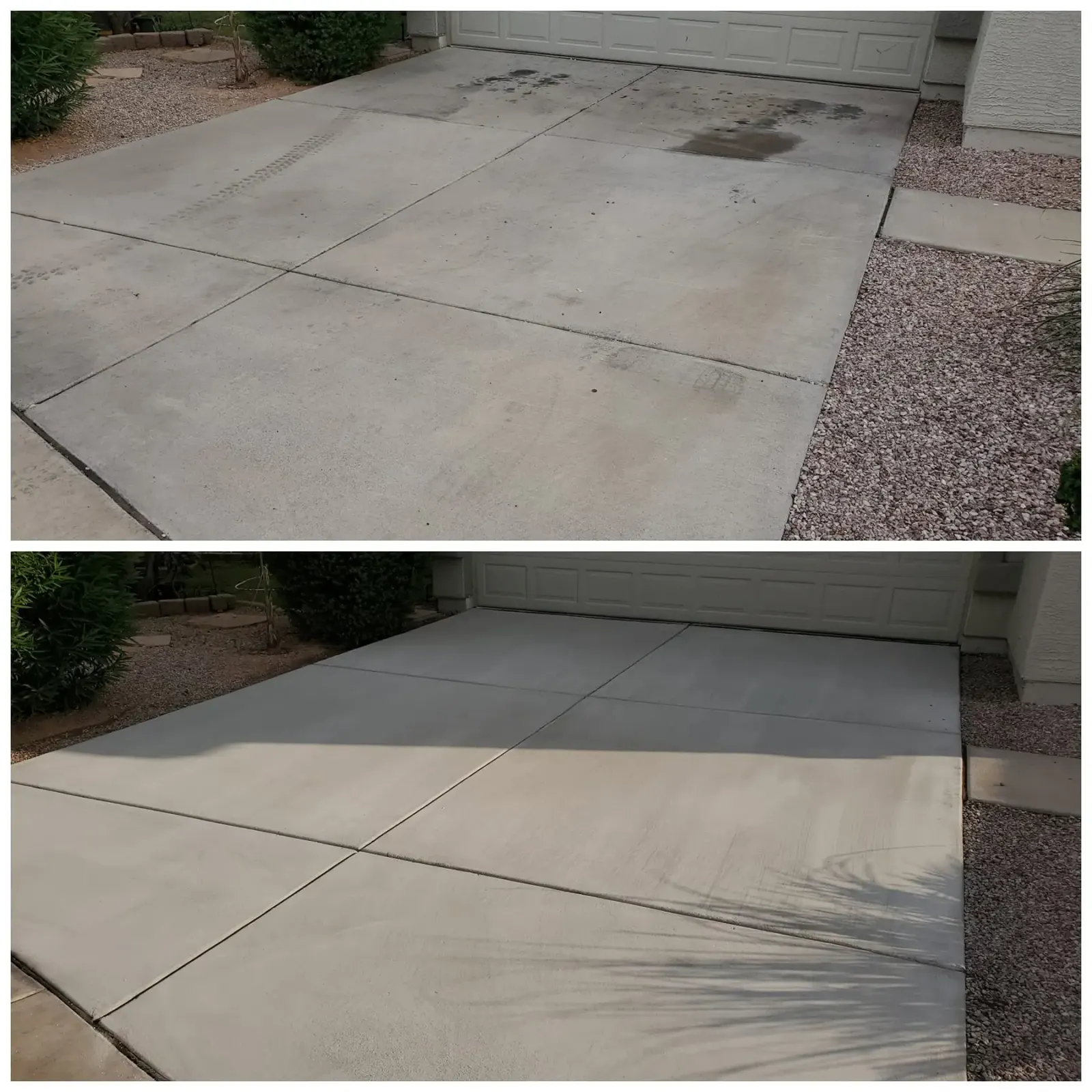
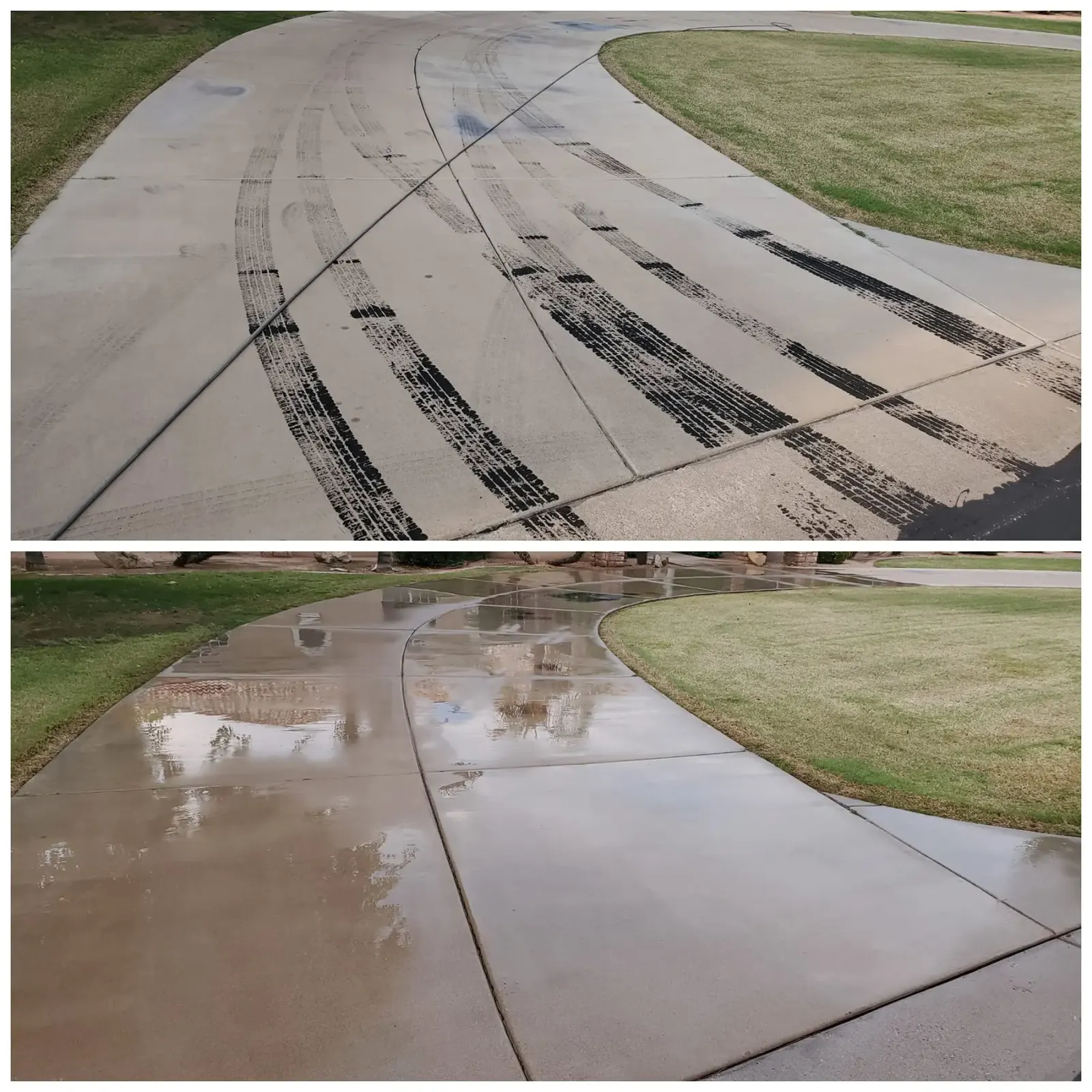
Actual driveway treatment results
These uploaded project photos show real Clean Surface residential work. Wet concrete can appear darker, and permanent cracks, repairs, etching, or deep discoloration may remain after cleaning.
A controlled treatment process
Why pressure alone is not the answer
Identify
Review the likely contaminant, surface, coating, age, damage, drainage, and previous attempts.
Test
Select a small test area and compatible treatment before expanding the work.
Treat
Use appropriate chemistry, heat, dwell time, agitation, flow, and controlled pressure.
Set expectations
Review improvement, remaining shadows, permanent damage, and whether repeat treatment is responsible.
Straight answers
Residential stain-removal questions
Can every driveway stain be completely removed?
No. Concrete and pavers are porous, and some contaminants penetrate deeply. Acid can etch the surface, coatings can discolor, and previous treatment can change the material. We explain the likely improvement and limitations before specialty treatment.
Is stain removal included with routine driveway cleaning?
Not automatically. Routine surface cleaning targets general dirt and traffic film. Oil, rust, battery residue, paint, tar, mineral deposits, and other specialty conditions require separate assessment and pricing.
Why not use more pressure?
Excess pressure can etch concrete, expose aggregate, disturb joints, damage pavers, or create permanent cleaning lines. Correct chemistry, heat, dwell time, agitation, water flow, and controlled rinsing are often more important.
Can you evaluate a stain from a photograph?
A wide photograph and a close view help us identify likely conditions and determine whether an on-site test is needed. Final expectations depend on seeing the surface, depth, damage, coatings, and previous attempts.
Where is residential stain treatment available?
Residential availability is confirmed by address throughout the Phoenix metro service area. Large commercial and multi-location stain-removal projects can be assessed across Arizona.
Send us the stain before we quote it
Include one wide photograph, one close view, the likely source, how long it has been present, and anything already used on it. We will tell you whether a photo review or on-site test is the responsible next step.
Start My Stain EvaluationChoose what works for you
Two easy ways to request service
Get a fast starting estimate, or send your job details directly through our Jobber request form.
Responsive communication
“They were easy to communicate with and responsive when reached out to.”